
Osaka, celebrated worldwide as “The Nation’s Kitchen,” offers some of Japan’s most vibrant and authentic market experiences. If you’re planning a trip and wondering where to shop, eat, and immerse yourself in local culture, this guide solves that problem. You’ll discover exactly which Osaka markets deserve your time, what makes each unique, and how to navigate them like a local.
This article delivers immediate value by showcasing the 10 best markets in Osaka—from historic food halls to Korea Town—complete with insider tips on timing, specialties, and what to buy. Whether you’re a food enthusiast hunting for the freshest sushi, a vintage fashion lover seeking hidden gems, or a cultural explorer wanting authentic Japanese experiences, these markets offer unforgettable moments that typical tourist spots can’t match.
Quick Overview of the 10 Osaka Markets Covered:
- Kuromon Ichiba Market – Osaka’s legendary food paradise
- Osaka Municipal Central Wholesale Market – authentic auction experience
- Tenjinbashisuji Shopping Street – Japan’s longest shopping arcade
- Namba Yasaka Market Area – local neighborhood charm
- Shinsekai Shopping Street – retro entertainment district
- Sennichimae Doguyasuji Shotengai – kitchen tools paradise
- Umeda Wholesalers Market – fresh produce hub
- Tempozan Marketplace – waterfront shopping
- Tsuruhashi Korea Town Market – authentic Korean flavors
- Shinsaibashi Shotengai – modern fashion and dining
For comprehensive planning resources and updated schedules, the official Osaka tourism website provides essential information about all major markets across the city.
The 10 Best Osaka Markets You Need to Visit
1. Kuromon Ichiba Market

Kuromon Ichiba stands as Osaka’s most iconic food market, stretching 600 meters with around 150 specialty shops. This historic marketplace has earned its nickname “Osaka’s Kitchen” by delivering exceptional fresh seafood—tuna, octopus, even fugu—alongside premium Kobe beef and seasonal produce. The official Kuromon Market website offers shop directories and event information.
Best for: Food lovers and seafood enthusiasts seeking authentic Japanese culinary culture.
What to buy/eat: Try the legendary kushikatsu (deep-fried skewers), grilled seafood purchased directly from vendors, fresh sea urchin, and takoyaki from specialty stalls.
Peak hours: Extremely crowded between 12:00 and 1:30 PM. Arrive around 10:00 AM for the best experience with manageable crowds.
Pro tip: Many shops close on Sundays and irregular Wednesdays—verify schedules before visiting. The freshest seafood stocks diminish after 2:00 PM, so arrive early.
2. Osaka Municipal Central Wholesale Market

This working wholesale market offers an authentic glimpse into Osaka’s food distribution system. The City of Osaka’s market information provides details about these essential wholesale operations that supply restaurants and retailers with the freshest catch and produce daily.
Best for: Early risers wanting to witness live fish auctions and professional wholesale operations.
What to buy/eat: Incredibly fresh seafood at wholesale prices, seasonal fruits, and specialty Japanese ingredients like kombu kelp and katsuobushi.
Peak hours: Dawn until mid-morning (5:00 AM–9:00 AM) when auctions happen and professionals conduct business.
Pro tip: Some wholesale markets offer special public visiting days—check official schedules for rare opportunities to participate in auctions.
3. Tenjinbashisuji Shopping Street

At 2.6 kilometers, this is Japan’s longest shopping arcade, featuring approximately 800 shops spanning everything from vintage fashion to traditional pottery. Among all Osaka markets, Tenjinbashisuji stands out for its sheer size and authentic, everyday local atmosphere.
The covered walkway takes 40 minutes to traverse end-to-end, creating an all-weather shopping paradise. Visit Tenjinbashisuji’s official website for store maps and special events.
Best for: Vintage fashion hunters, bargain seekers, and anyone wanting to experience authentic local Osaka life.
What to buy/eat: Secondhand designer clothing, handmade pottery, traditional kimonos, crispy croquettes from Nakamuraya, kushikatsu, and fish-shaped taiyaki waffles.
Peak hours: Afternoons through early evening (2:00 PM–7:00 PM) offer the liveliest atmosphere with the best street food availability.
Pro tip: Many eateries offer evening discounts, making dinner here incredibly budget-friendly. The multitude of lanterns creates perfect Instagram photo opportunities.
4. Namba Yasaka Market Area

This neighborhood market district surrounding Namba Yasaka Shrine offers a quieter, more residential shopping experience compared to tourist-heavy spots. Local residents frequent these shops for daily necessities and fresh ingredients, making it one of the more authentic markets in Osaka.
Best for: Travelers seeking authentic neighborhood experiences away from tourist crowds.
What to buy/eat: Fresh vegetables from local farms, everyday Japanese groceries, neighborhood bakery items, and home-style prepared foods.
Peak hours: Mornings (8:00 AM–11:00 AM) when locals shop for daily ingredients.
Pro tip: Visit the striking Namba Yasaka Shrine with its giant lion-head stage while exploring the area—it’s one of Osaka’s most photogenic landmarks.
5. Shinsekai Shopping Street

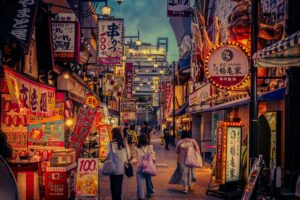
Shinsekai represents Osaka’s nostalgic retro period, centered around the iconic Tsutenkaku Tower. This district evokes the early-to-mid 1900s with its carnival atmosphere, neon signs, and traditional entertainment culture, making it a must-visit among Osaka markets for atmosphere seekers.
Best for: Food adventurers and those wanting to experience Osaka’s “Kuidaore” (eat until you drop) philosophy.
What to buy/eat: Authentic kushikatsu at 24-hour eateries, takoyaki, horumon-yaki (grilled offal), beef fillet cutlet sandwiches, and unique mixed juice drinks.
Peak hours: Evening (7:00 PM onwards) when neon lights and lanterns create the full retro atmosphere.
Pro tip: The Janjan Yokocho street features about 50 shops within 130 meters—don’t miss photos with the Billiken statue for good luck.
6. Sennichimae Doguyasuji Shotengai

This 150-meter shopping arcade specializes entirely in cooking utensils and kitchen equipment. With over 130 years of history, it’s become the premier destination for professional chefs and home cooking enthusiasts alike. The Doguyasuji official site features shop listings and festival information.
Best for: Cooking enthusiasts, professional chefs, and anyone seeking authentic Japanese kitchen tools as souvenirs.
What to buy/eat: Premium Japanese kitchen knives (particularly at Ichimonji Chuki), takoyaki pans, professional cookware, realistic food samples, traditional tableware, and bento boxes.
Peak hours: Weekday afternoons (1:00 PM–4:00 PM) are less crowded than weekends.
Pro tip: October 9 hosts the Doguyasuji Festival with special sales, food sample-making workshops, and lottery games—perfect timing if you’re visiting in autumn.
7. Umeda Wholesalers Market

Located in Osaka’s northern Kita district, this wholesale hub supplies fresh produce, seafood, and specialty ingredients to the city’s northern restaurants and retailers. The market maintains an authentic, working atmosphere that distinguishes it from more tourist-oriented Osaka markets.
Best for: Early morning visitors wanting to see professional food distribution and score fresh ingredients at competitive prices.
What to buy/eat: Wholesale-priced vegetables, ultra-fresh seafood, seasonal Japanese fruits, and specialty cooking ingredients.
Peak hours: Very early morning (5:00 AM–8:00 AM) during active wholesale operations.
Pro tip: Nearby Umeda’s underground shopping complexes offer climate-controlled retail therapy after your early market visit.
8. Tempozan Marketplace

This modern waterfront complex near Osaka Bay combines shopping with entertainment attractions. Located beside Osaka Aquarium Kaiyukan and the iconic Tempozan Ferris Wheel, it offers a contemporary market experience with bay views.
Best for: Families and tourists wanting shopping combined with waterfront attractions and aquarium visits.
What to buy/eat: Souvenir shops with Osaka-themed items, seafood restaurants featuring bay catches, international cuisine options, and dessert cafes.
Peak hours: Weekends and holidays (11:00 AM–3:00 PM) get crowded with families.
Pro tip: Combine your market visit with a ride on the Tempozan Ferris Wheel at sunset for spectacular Osaka Bay panoramas.
9. Tsuruhashi Korea Town Market

Spanning three interconnected shopping streets over 500 meters, this is Japan’s largest Korea Town. The district offers authentic Korean culture, cuisine, and shopping without leaving Osaka, making it a unique multicultural experience among the diverse Osaka markets.
Best for: K-pop fans, Korean food enthusiasts, beauty product hunters, and cultural explorers.
What to buy/eat: Yangnyeom chicken, makgeolli (Korean rice wine), authentic Korean cosmetics, K-pop merchandise, Korean fashion items, and traditional Korean snacks at affordable prices.
Peak hours: Early evening (5:00 PM–8:00 PM) when restaurants come alive.
Pro tip: The area includes the 1,600-year-old Miyukimori Tenjingu Shrine—explore this historical site while shopping for a complete cultural experience.
10. Shinsaibashi Shotengai

This covered shopping arcade stretches over 600 meters through Osaka’s entertainment heart, connecting to the famous Dotonbori area. The street perfectly blends international fashion brands with local boutiques and traditional shops.
Best for: Fashion shoppers, entertainment seekers, and those wanting a complete urban shopping experience.
What to buy/eat: International and Japanese fashion brands, cosmetics, accessories, street food including takoyaki and okonomiyaki, and trendy cafe treats.
Peak hours: Evenings (7:00 PM–10:00 PM) when the area transforms into an illuminated entertainment district.
Pro tip: Walk south to Dotonbori for the iconic Glico Man sign and vibrant riverside nightlife after shopping.
Practical Tips for Visiting Osaka Markets
Best time to visit: Most Osaka markets operate year-round, but timing matters significantly. Wholesale markets like Kizu and Umeda require early morning visits (5:00 AM–9:00 AM) for auctions and freshest selection. Food markets like Kuromon peak between 10:00 AM and 1:00 PM but get extremely crowded—arrive slightly earlier or later. Shopping arcades like Tenjinbashisuji and Shinsaibashi offer comfortable experiences from afternoon through evening.
Etiquette and behavior: Japanese market culture values respect and consideration. Avoid eating while walking unless in designated areas. Ask permission before photographing vendors or their stalls. At food stalls, dispose of trash properly in provided bins. In wholesale markets during business hours, stay out of professional buyers’ way. When sampling food, purchase something as courtesy. Speak quietly and avoid blocking narrow aisles.
Budget expectations: Markets in Osaka cater to all budgets. Street food items typically cost 280-500 yen. Fresh seafood at wholesale markets offers better value than restaurants. Shopping arcades feature both budget-friendly vintage shops and premium boutiques. Bring cash—many smaller vendors don’t accept cards. Budget approximately 3,000-5,000 yen per person for a full market day including food, drinks, and small purchases.
Navigation and transport: Osaka’s excellent public transportation makes market hopping easy. Purchase an ICOCA card or Osaka Metro Day Pass for unlimited travel. The Midosuji Line (red) connects most tourist destinations including Namba (for Kuromon, Doguyasuji, and Shinsaibashi) and Tenjinbashisuji 6-chome. The Osaka Loop Line serves Tsuruhashi Korea Town and Tempozan area. Download Google Maps offline for navigation. Wear comfortable walking shoes—you’ll cover significant distances exploring these markets.
For food lovers planning broader culinary adventures, check out our comprehensive best foodie cities guide to discover other incredible destinations worldwide.
Why Osaka Markets Offer Unforgettable Experiences

The beauty of exploring Osaka markets lies in their authenticity. Unlike manufactured tourist attractions, these are working communities where locals have shopped for generations. At Kuromon Ichiba, you’ll see grandmothers selecting the freshest fish alongside curious travelers. In Tenjinbashisuji, neighborhood shopkeepers greet regular customers by name while welcoming newcomers with genuine warmth.
Each market reveals a different facet of Osaka’s character. The wholesale markets showcase the city’s role as a distribution hub, where professional buyers negotiate deals that feed millions. The shopping arcades demonstrate how traditional retail adapts to modern needs while preserving historic architecture. Korea Town illustrates Osaka’s multicultural heritage and openness to international influences.
The culinary experiences alone justify visiting these markets. Street food vendors have perfected recipes passed down through generations—takoyaki makers who’ve been flipping octopus balls for decades, kushikatsu specialists who know exactly how long to fry each skewer. You’re not just eating; you’re tasting history and tradition in every bite.
Frequently Asked Questions About Osaka Markets
What time do most Osaka markets open? Most shopping arcades and food markets open between 8:00 AM and 10:00 AM. Wholesale markets like Kizu operate much earlier (5:00 AM–6:00 AM) for professional buyers and auctions. Evening entertainment districts like Shinsekai truly come alive after 6:00 PM.
Do I need to speak Japanese to shop at Osaka markets? While helpful, Japanese isn’t essential. Many vendors in tourist-friendly markets like Kuromon and Doguyasuji understand basic English. Pointing, smiling, and using translation apps work effectively. Less touristy markets offer more authentic experiences despite potential language barriers.
Are credit cards accepted at Osaka markets? Cash remains king at traditional markets. While larger shops in modern arcades accept cards, bring sufficient yen for street food stalls, small vendors, and wholesale markets. ATMs are available at nearby convenience stores.
Which Osaka market is best for first-time visitors? Kuromon Ichiba Market offers the most accessible introduction to Osaka’s market culture. Its central location, English-friendly vendors, diverse food options, and tourist infrastructure make it perfect for first-timers before exploring more authentic neighborhood markets.
Final Thoughts – Why Osaka Markets Belong on Every Traveler’s List
Osaka markets represent the city’s soul—vibrant, welcoming, delicious, and authentically Japanese. From the dawn auctions at wholesale venues to the neon-lit evenings in Shinsekai, these ten destinations collectively showcase why Osaka earned its reputation as “The Nation’s Kitchen.”
What makes visiting Osaka markets truly rewarding is the human connection. Vendors take pride in their products and love sharing their knowledge with curious visitors. A simple transaction becomes a cultural exchange—learning how to properly eat kushikatsu, discovering which knife works best for specific tasks, or understanding the difference between various kimchi varieties.
Whether you’re a first-time visitor or a seasoned Japan traveler, these markets offer fresh discoveries with every visit. Start with Kuromon Ichiba for its accessible introduction to market culture, then venture to lesser-known gems like Namba Yasaka or Umeda for authentic neighborhood experiences. Each market adds another layer to your understanding of this remarkable city.
The diversity ensures every traveler finds something compelling—food lovers discover unparalleled freshness, shoppers uncover unique treasures, and cultural explorers witness genuine daily life. Plan your market adventure today, bring your appetite and curiosity, and prepare to experience the real Osaka.